
In this article, I will cover Risk Like a Pro and how intelligent money management can change your experience with prop trading.
Long term success hinges on your ability to control risk, size positions, and strategize with discipline. Implementing professional methods and steering clear of typical pitfalls enables traders to protect their capital, limit drawdowns, and obtain consistent profit in challenging trading conditions.
Understanding Prop Trading Risk
For understanding the risks in prop trading, it is important to note how different it is from retail trading. In prop trading, the trader is using a company’s capital, which has its own strict rules, such as daily loss limits, maximum drawdowns, and profit targets.
In addition to these rules, there is zero tolerance for mistakes; even the smallest mistake can lead to termination of the account. Risk is not only about losing money, but it is also about the chance of breaking one of the company’s rules.
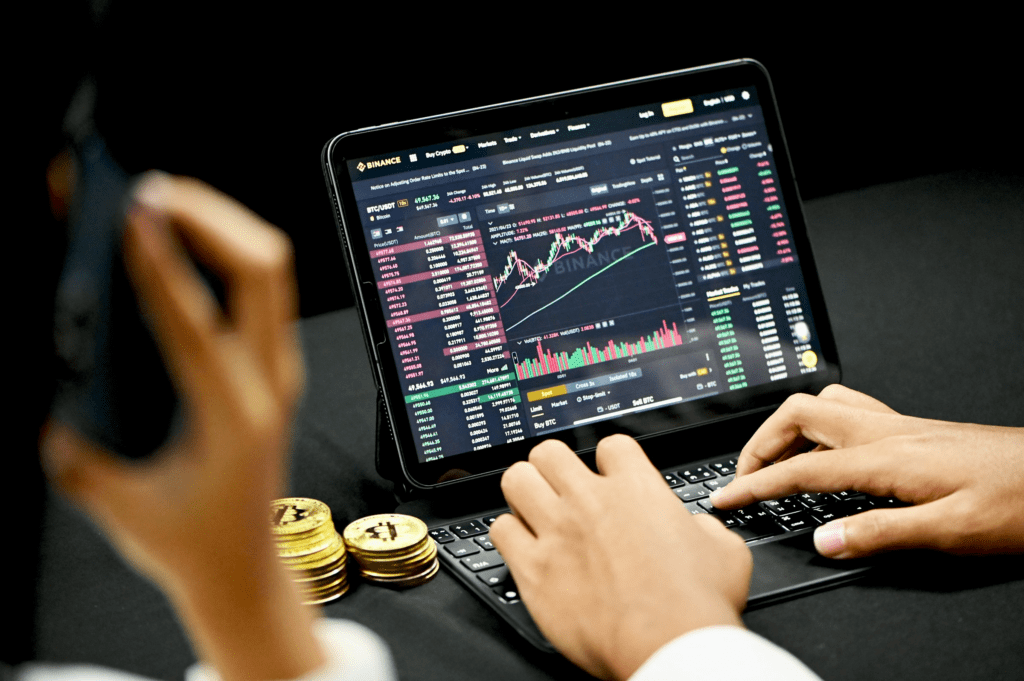
To stay within the limits of these rules, prop firm traders have to exercise great restraint in managing the size of their trades, leverage, and frequency of trading. These rules place great psychological pressure on traders because they have to protect the capital provided by the company and still make a profit from trading.
Ultimately, success in prop trading is the result of great, disciplined, and controlled risk trading combined with a well-designed plan, and ultimately focusing on minimizing the loss and maintaining a steady performance.
Core Principles of Smart Money Management
Capital Preservation First
Your number one concern should be protecting your trading capital. The longer you can stay in the game, the more likely you are to become profitable over the long term.
Risk Per Trade Control
To ensure the longevity of your trading account, you should keep your risk for any single trade to a small percentage (typically 1–2%)
Favorable Risk-Reward Ratio
In order to be profitable, you should always target a risk:reward ratio of at least 1:2. This means that if you are only winning 25% of the time, you will still be profitable.
Consistency Over Aggression
In the long run, making a series of small, consistent profits will be more beneficial than making one large profit, as this can expose you to the risk of a large loss.
Position Sizing Discipline
Avoid overexposure in your trading account by adjusting your trade size based on your account balance and risk appetite.
Strict Use of Stop-Loss
In order to protect your capital, you should always set an exit point before entering a trade.
Drawdown Management
To avoid making emotional decisions that could result in blowing out your trading account, set a limit to the amount you can lose daily and in total.
Emotional Control
Trading based on fear, greed, and impulse will result in deviating from a trade plan, and should be avoided.
Adaptability to Market Conditions
As the market volatility, trends, and risk in the market change, your objectives and strategy should change as well.
Position Sizing Strategies
Fixed Percentage Risk Model: Risking a fixed percent of your account (say 1-2%) on each trade will protect your account from large losses while allowing your account to grow steadily over time.
Volatility-Based Position Sizing: Position sizes should adjust based on the volatility of the market. In a very volatile market, a smaller size should be used, while in a very stable market a larger size may be used to better balance the exposure to risk.
Fixed Lot Size Approach: Always trade the same size regardless of the account balance. This method is simple but inelastic (i.e. less flexible to adapt in response to changing conditions), meaning that it may raise risk in periods of drawdowns.
Equity-Based Position Sizing: The larger your account balance, the larger your position size. This means that your position size will shrink in periods of losses in order to save your capital.
Stop-Loss Based Position Sizing: Position size is determined by the distance to your stop loss. If your stop loss is wide, your position size should be smaller. If your stop loss is tight, your position size can be larger.
Kelly Criterion Method: The Kelly method is a more mathematically-aggressive way of calculating optimal position size based on your win rate and risk : reward ratio. This method should be used more cautiously than the others.
Risk Parity Strategy: Dividing your capital among your trades so that each position has the same degree of risk can help balance the exposure of your portfolio.
Partial Entry and ExitManage risk and secure profits by entering or exiting trades in parts instead of all at once.
Max Risk Policy: Restrict total open risk across all positions (for example, at any time, total risk across all positions should not exceed 5% of total capital).
Dynamic Position Adjustment: Modify position sizing according to results—after losses decrease position size, and after consecutive wins increase position size.
Setting Stop-Loss and Take-Profit Levels
Define Risk Before Entry
Prepare a plan that includes both a take profit and a stop loss before entering any new trade.
Use Technical Levels
Greater probabilities of success will come from placing stop loss orders above resistance and take profit orders below support.
Percentage Based Stops
A fixed percentage of account equity or a fixed price movement will maintain consistency when setting profit and loss targets.
Maintain Risk-Reward Ratio
Your potential profit should always justify the risk. A target of a 1:2 ratio will maintain adequate risk and reward.
Avoid Tight Stop-Losses
Your trade will be exited too early if market fluctuations are small and the stop loss is set tight.
Use Trailing Stop-Loss
Profits will be protected but further gains will still be allowed if a stop loss is moved in the favor of the trade.
Consider Market Volatility
Stops should be set wider when the market is volatile and narrower when the market is stable to reduce unnecessary losses.
Set Realistic Take-Profit Targets
Targets should be set in the direction of price movement and the structure of the market should be considered instead of limits that are unrealistic.
Stick to Your Plan
Avoid losses by not moving a stop loss further away. This increases risk and will lead to larger drawdowns.
Strategy Evaluation
Ensure that previous trades are evaluated with respect to stop loss and take profit placement for future improvement.
Managing Drawdowns Effectively
Establish Drawdown Guidelines
Set daily and total loss thresholds (sub 3-5% daily, 8-10% total losses), drawing the line on loss amounts per trading account. Drawdown guidelines ensure compliance with prop company’s trading account drawdown rules.
Post-loss Risk Reduction
Risk control at loss per trade declines as drawdown increases. Maintain capital and begin to turn around drawdown control.
Take Pauses And Resets
Losing streaks need to be relinquished to mitigate the outcome trading behavior is more with trade account utilization.
Abide By The Trading Plan
No need to act differently when trading plans and strategies to flexibly adjust to losses is a reality. Trading plans and flexibly change trading strategy are poor recovery systems.
Trading For Revenge Is Not Appropriate
While position sizing and trading volume to make trading position control should be utilized, this often is more right than wrong. What is right with trading is that it is more expensive as a position control mechanism.
(Post-loss) Trading Scrutiny
In light of losses, trading activity is altered to account for previous losing trades and losses (except).
(Post-loss) Trading Scrutiny
Trading during drawdowns has to be more selective, with more preference given to best trading positions. Drawdowns of losing trades need to be prioritized to allow for top trading declines.
Risk-to-Reward Optimization
Get the Risk-Reward Ratio Right: This is how much you risk compared to how much you can make (e.g. risk $1 to make $2 = 1:2 ratio).
Get the Ratio Right: Risk-reward ratios of 1:2 or 1:3 are better as you can still make a profit with a low win rate.
Balance Win Rate and Reward: Not winning trades can still be profitable if the average reward is a lot more than the average risk.
Take Only The Highest Quality Trade Setups: Look for trades with a good clear entry, a good clear stop loss and good profit potential and avoid taking trades otherwise.
Let Winning Trades Run: Don’t close winning trades early; let them go to the planned take profit to maximize your profits.
Let Losing Trades Run: Don’t close losing trades early; let them go to the planned stop loss to prevent your losses from increasing.
Use Partial Profit Taking: At intermediate levels take some profits and then let the rest of the position run.
Get The Markets Right: In trending markets, go for bigger profits; in sideways markets go for smaller profits.
Tools and Techniques for Risk Management
Trading Journal
Document all of your trades, how you enter and exit, what your risk was, and what the outcome was. You can identify patterns, and mistakes, and find things you can improve.
Risk Calculator
You can use the position size calculator to show you what your exact Lot size should be, based on your risk percentage, and how far away your stop loss is.
Stop Loss and Take Profits
You can set take profit and stop loss so you can take away your emotions from the decision and ensure some discipline.
Risk Control on Trading Platforms
Platforms such as Meta Trader and TradingView have tools on the platform to set limits, set alerts, and protect your account from overtrading.
Tools for Tracking Drawdowns
You should track your daily and total drawdowns so that you can adhere to the prop firm’s limits and avoid account violations.
Software for Backtesting
You should be able to test your strategy on past data to determine your risk, win rate, and overall performance before you go live.
Economic Calendars
Use these to know what news is coming so you can avoid periods of high risk due to volatility.
Alerts
You can set alerts so you don’t have to stare at the chart and it reduces the chance of impulsive trades.
Trading Bots and Automation
Bots can trade for you based on the rules that you set. This bring consistency and takes away the emotions from the trading.
Common Risk Management Mistakes to Avoid

Overleveraging Positions
Leverage can get you in trouble quick, losing accounts, especially in prop trading with tighter rules.
Ignoring Stop-Losses
No stop-loss trading, or moving the stop-loss to avoid a loss, can result in a loss that keeps growing.
Risking Too Much Per Trade
Losing streaks can be problematic when you are risking more than 1-2% of your account.
Revenge Trading
Recovery trading in the form of added positions or overtrading usually ends in deeper drawdowns.
Lack of a Trading Plan
Random trading with no plan will create a combination of bad decisions with bad risk management.
Overtrading
More trades means more risk exposure which means less profit.
Not Adjusting During Drawdowns
Keeping risk the same means you are not coping with losses, which can make the problem worse.
Emotional Decision-Making
Trading in fear or greed is impulse trading, which results in bad risk management.
Conclusion
In professional prop trading, it is not about big profits, but rather how it is possible to capture and protect trading capital and do it with trading discipline. Bottom line money management risks can be protected through position sizing, risk per trade and risk/reward ratio.
Long-term profitable trading is possible by drawing down risks, utilizing the right tools and avoiding the most common mistakes. The volatile markets can be mastered through systematic, patented and emotionally controlled trading. When trading discipline is rewarded, success is no longer a matter of chance.
FAQ
No, trading without a stop-loss is highly risky. It can lead to large losses and potential account termination in prop trading environments.
Drawdown refers to the decline in your account balance from its peak. Prop firms set strict daily and overall drawdown limits that traders must not exceed.
No, trading without a stop-loss is highly risky. It can lead to large losses and potential account termination in prop trading environments.
Reduce your risk, focus on high-quality setups, and take a break if needed. Gradual recovery is safer than trying to win back losses quickly.