

Best Risk Management Technique | Prop Firm Strategy In this article, I am going to share with you about the Best Risk Management Strategies that help all the traders in protecting their capital and clear evaluations successfully.
You will gain insights on how professional traders limit their risk, minimize drawdowns, and achieve consistent profitability.
These strategies help traders remain safe while trading, avoid violations to their accounts, and lead them to success in prof firm account scaling over time.
Key Poinst & Best Risk Management Strategy for Prop Firms
- Conservative Risk Per Trade (0.25%–0.5%) Limiting risk per trade ensures capital preservation, allowing traders to survive losing streaks without catastrophic damage.
- Daily Loss Limit (1–2%) Setting strict daily loss limits prevents emotional revenge trading and protects accounts from excessive drawdowns.
- Hard Stop-Losses on Every Trade Mandatory stop-losses enforce discipline, ensuring losses remain controlled and never spiral beyond acceptable thresholds.
- Maximum Overall Drawdown Monitoring Tracking overall drawdown helps traders avoid breaching firm rules, maintaining eligibility and long-term trading sustainability.
- Avoid High-Impact News Events Staying out during major news releases prevents unpredictable volatility, slippage, and sudden account-threatening market moves.
- Dynamic Position Sizing Adjusting position sizes based on volatility and confidence ensures consistent risk exposure across varying market conditions.
- Risk-to-Reward Ratio (RR) Targeting Maintaining favorable RR ratios guarantees profitability potential outweighs risk, even with lower win-rate trading strategies.
- Automated Risk Management Tools Using automation reduces human error, enforces rules consistently, and strengthens discipline across all trading decisions.
- Limited Daily Trade Frequency Restricting trades per day minimizes overtrading, enhances focus, and ensures only high-quality setups are executed.
- The 3D Formula (Drawdown, Distance, Daily) Balancing drawdown limits, trade distance, and daily exposure creates a holistic framework for sustainable risk control.
10 Best Risk Management Strategy for Prop Firms
1. Conservative Risk Per Trade (0.25%–0.5%)
This is one of the most critical rules in prop firm trading which requires extremely low risk per trade (from 0.25% to 0.5% granted one get enormous accounts).
This means that even prolonged periods of losses never severely impact your capital. For instance if your account is $10,000 and you risk 0.5%, that’s only $50 per trade.
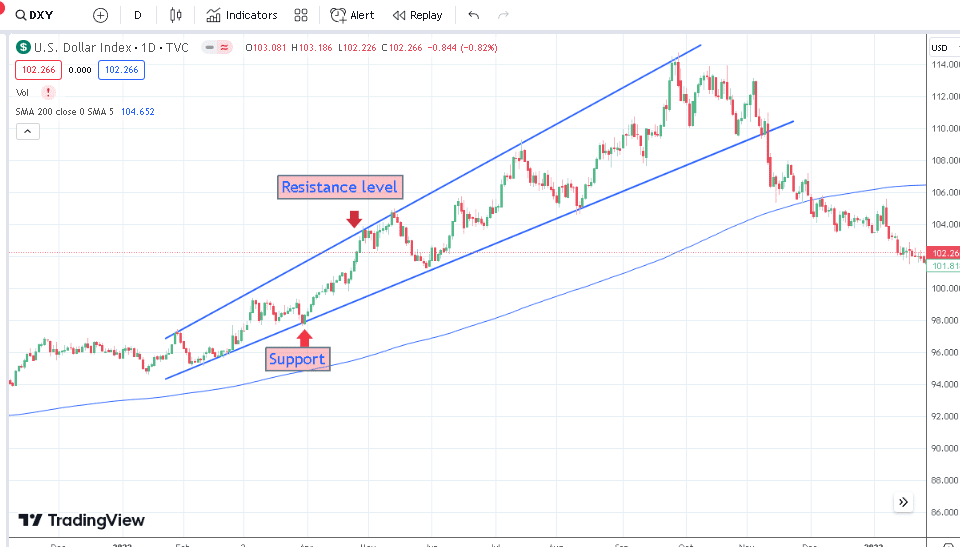
Such a prudent approach aids traders in surviving sudden psychological pressure and market volatility. None of them are high risk, because prop firms hate high-risk trading: they want consistency!
This approach generates consistent account growth over time with the minimal risk of breaching a daily or overall drawdown.
Conservative Risk Per Trade (0.25%–0.5%) Pros & Cons
Pros:
- Protects capital from large losses
- Reduces impact of losing streaks
- Improves long-term account survival
- Supports prop firm rule compliance
- Builds trading discipline and patience
Cons:
- Slower profit growth
- Requires more trades for targets
- Can feel restrictive for aggressive traders
- Limits high-risk high-reward setups
- May reduce short-term excitement
| Feature | Explanation |
|---|---|
| Low Capital Exposure | Limits risk to a very small percentage of account balance per trade. |
| Capital Protection | Helps protect account from large losses during losing streaks. |
| Psychological Stability | Reduces emotional pressure while trading. |
| Evaluation Safety | Keeps drawdown well within prop firm limits. |
2. Daily Loss Limit (1–2%)
The daily loss limit is a crucial rule that stops traders from overtrading or emotionally trying to win back losses. The majority of prop firms have a 1–2% max loss for the day.
If you do this, your account will probably be prohibited or you could lose it forever. It helps to discipline and prevents you from revenge trading after losses
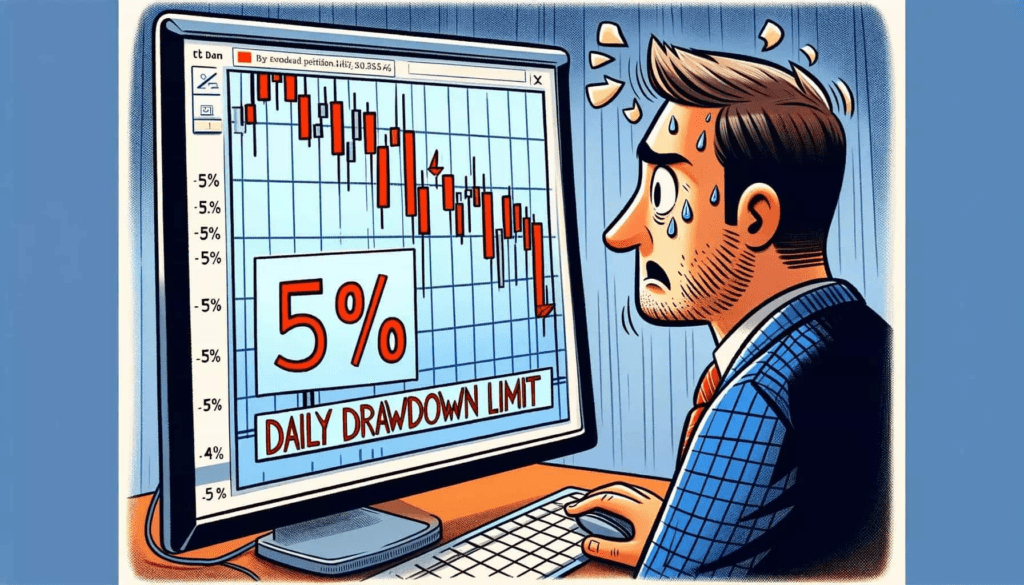
Traders always needs to calculate risk per trade before market opens and stop trading if the given limit of loss is reach.
Respecting this boundary allows the trader to save capital for future opportunities and not make a decision based on emotion, which is one of the major reasons traders fail in prop firm challenges.
Daily Loss Limit (1–2%) Pros & Cons
Pros:
- Prevents major daily account damage
- Controls emotional trading behavior
- Encourages disciplined decision-making
- Protects against revenge trading
- Helps maintain evaluation rules
Cons:
- Can stop trading early after losses
- Reduces recovery opportunities in one day
- Adds pressure during losing streaks
- May feel restrictive for active traders
- Limits flexibility in volatile markets
| Feature | Explanation |
|---|---|
| Loss Control | Caps maximum loss allowed in a single trading day. |
| Discipline Enforcement | Prevents revenge trading and overtrading behavior. |
| Account Protection | Stops traders from blowing accounts in one session. |
| Rule Compliance | Ensures alignment with prop firm evaluation rules. |
3. Hard Stop-Losses on Every Trade
Using risk management or a hard stop-loss on every trade is a must when it comes to protecting capital.
A stop-loss is a predetermined price at which a trade will automatically close if the market moves against you.
This eliminates emotional decision-making and keeps losses in check. One bad trade without a stop-loss can erase days and weeks worth of profits.
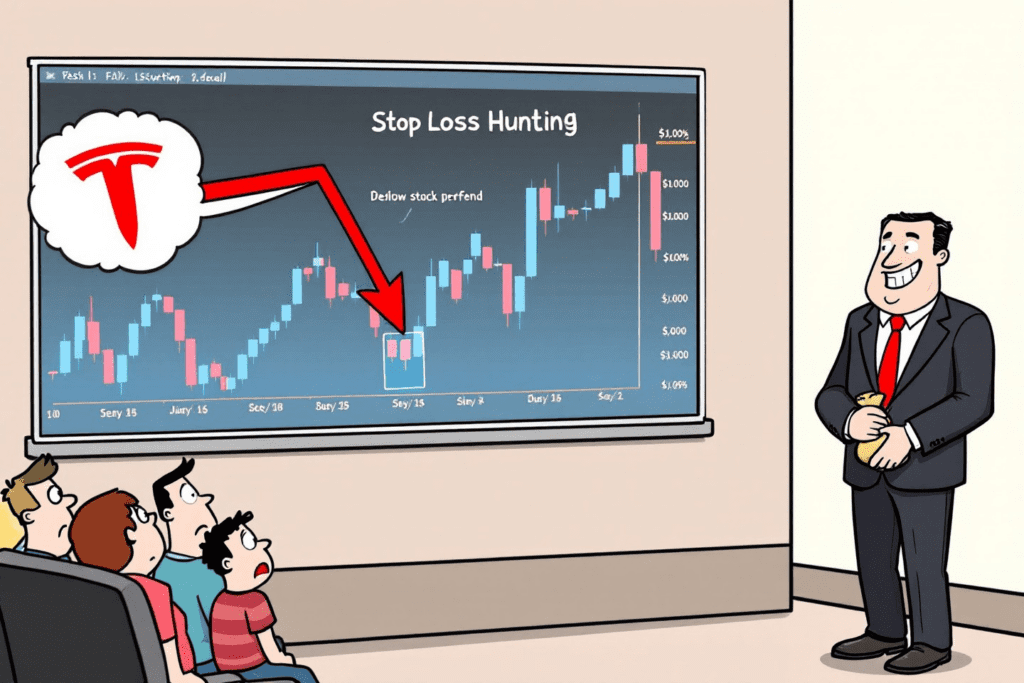
Unlike retail trading, prop firms do have strict expectations in regards to these rules, as trades without stop-losses will get a trader’s account violated.
This also not only develops a practice of consistency but gives the opportunity to analyse performance in much factual way. You plan your exit before you enter the trade, not while in the heat of battle with a moving market.
Hard Stop-Losses on Every Trade Pros & Cons
Pros:
- Limits maximum loss per trade
- Removes emotional decision-making
- Protects account from large drawdowns
- Improves risk consistency
- Supports structured trading plan
Cons:
- Can trigger in volatile markets early
- May stop trades before reversal
- Requires precise placement skills
- Reduces flexibility in management
- Can cause frustration in choppy markets
| Feature | Explanation |
|---|---|
| Risk Control | Defines maximum loss before entering a trade. |
| Emotional Removal | Eliminates decision-making during losing trades. |
| Capital Safety | Prevents large unexpected drawdowns. |
| Strategy Consistency | Ensures every trade follows a structured plan. |
4. Maximum Overall Drawdown Monitoring
Overall drawdown is the total loss from your peak account value. This is very important in prop trading as firms impose tight limits, typically 5%–10%. If you exceed it, your account gets killed.
Traders need to monitor equity consistently, not just individual trades. A prudent strategy is to have internal triggers at 50% and 75% of the drawdown threshold designed to reduce risk early.
This is helpful for position sizing or stopping trading whenever necessary. Preventing extensive drawdown and therefore allowing for long-term survival
Plus protection against small losses spiraling into a catastrophic account loss (this is one of the most common fail reasons in trading evaluations).
Maximum Overall Drawdown Monitoring Pros & Cons
Pros:
- Protects long-term account survival
- Helps track total risk exposure
- Prevents account termination
- Encourages disciplined trading behavior
- Improves risk awareness
Cons:
- Constant monitoring required
- Can create trading pressure
- Limits aggressive strategies
- Slows down recovery after losses
- Reduces risk-taking confidence
| Feature | Explanation |
|---|---|
| Equity Tracking | Monitors total account balance decline. |
| Early Warning System | Alerts traders before hitting dangerous levels. |
| Risk Adjustment | Helps reduce trade size when needed. |
| Account Survival | Prevents breach of prop firm maximum loss limits. |
5. Avoid High-Impact News Events
When it comes to high-impact economic news such as CPI data, interest rate decisions or employment reports in any market can lead to extreme volatility and unpredictable price spikes.
Spreads widen, and false stop-losses are triggered during these periods. If they are not specifically designed for it, prop firms usually discourage trading during major news events.

Staying away from those phases preserves consistent output and lowers the needless threat. An economic calendar is essential for traders to plan ahead of their trading session and avoid being in the market during high-risk announcement.
By staying out of the news volatility, they preserve their capital and reduce emotional toll while increasing odds for clean technical trades that align with strategy rather than random constraints.
Avoid High-Impact News Events Pros & Cons
Pros:
- Reduces unpredictable volatility risk
- Prevents slippage losses
- Improves trade stability
- Enhances technical accuracy
- Protects stop-loss execution
Cons:
- Fewer trading opportunities
- Requires economic calendar tracking
- May miss big market moves
- Limits intraday flexibility
- Reduces potential high-profit spikes
| Feature | Explanation |
|---|---|
| Volatility Protection | Avoids unpredictable price spikes. |
| Spread Stability | Prevents widening spreads during news releases. |
| Stop-Loss Safety | Reduces chance of slippage losses. |
| Strategy Accuracy | Ensures clean technical trading conditions. |
6. Dynamic Position Sizing
When we talk about dynamic position sizing, it means to dynamically adjust trade size based on account balance, market volatility and current risk exposure.
Traders increase or decrease their positions based on conditions, rather than predefined lot sizes. That family may mean that as volatility picks up, we are sizing down to keep risk at even levels.
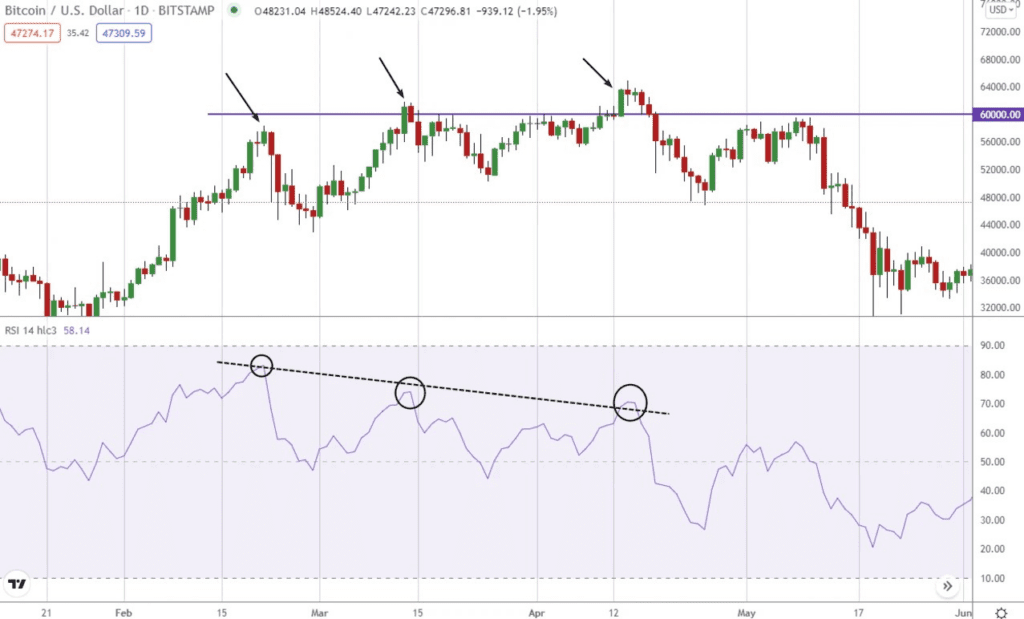
It is not just about picking a few good stocks here and there, though that is also an important part of prop firm trading because it helps you avoid high drawdown rules.
It also helps to preserve profits through losing streaks but allows for growth in strong performance periods. – Dynamic sizing allows for flexibility and prevents overexposure.
This is an fundamental order form technique that differentiates traders who are persistent from those who use set, inflexible lot sizing types.
Dynamic Position Sizing Pros & Cons
Pros:
- Adjusts risk based on market conditions
- Improves capital protection
- Enhances flexibility in trading
- Helps maintain consistent risk levels
- Supports account growth strategy
Cons:
- Requires advanced calculation skills
- Can lead to mistakes if misused
- Needs constant adjustment
- Difficult for beginners
- Slows down decision-making
| Feature | Explanation |
|---|---|
| Flexible Lot Size | Adjusts trade size based on market conditions. |
| Risk Balance | Maintains consistent risk across trades. |
| Profit Protection | Reduces exposure during losing streaks. |
| Growth Optimization | Increases size during strong performance periods. |
7. Risk-to-Reward Ratio (RR) Targeting
In simple terms, RR is the ratio of how much you would lose if the trade goes against you versus how much you would gain if it works out.
At prop firms, one common go-to strategy is targeting a risk-reward of 1:2 or greater, which means you put in $1 of risk for a chance to earn $2+ if the trade moves your way.
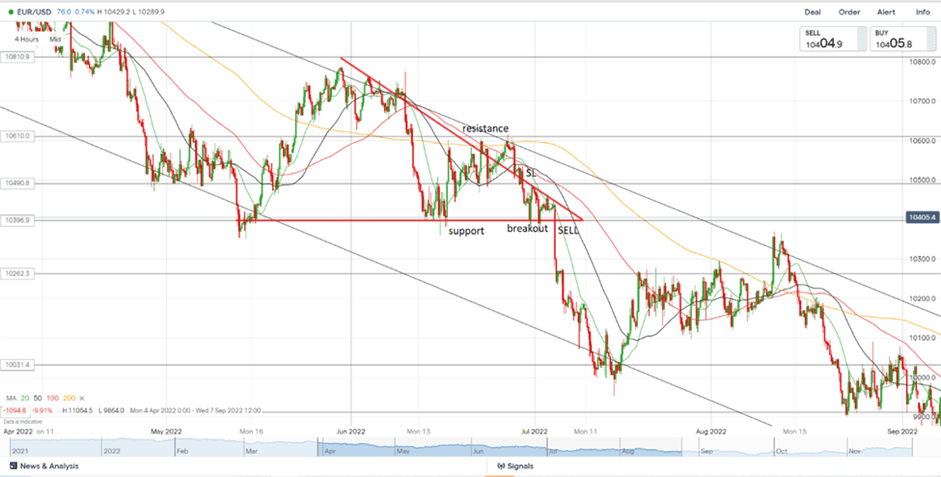
Even with a win rate below 50%, this guarantees a profit. Strong RR applied consistently allows traders to survive periods of losses while still expanding their account.
This often results in both overtrading and account blowout, in turn signs of poorRR management.
The difference comes when traders focus on high-quality setups with favorable RR. Prop firms don’t want to see a dozen low quality, non rewarded trades daily.
Risk-to-Reward Ratio (RR) Targeting Pros & Cons
Pros:
- Ensures long-term profitability
- Allows profit with lower win rate
- Improves trade quality focus
- Reduces emotional pressure
- Encourages disciplined entries
Cons:
- Hard to achieve in all markets
- May reduce trade frequency
- Requires patience for setups
- Can lead to missed trades
- Needs strong strategy alignment
| Feature | Explanation |
|---|---|
| Profit Efficiency | Ensures higher profit potential than risk taken. |
| Win Rate Flexibility | Allows profitability even with lower win rate. |
| Trade Quality Filter | Encourages only high-quality setups. |
| Long-Term Growth | Supports consistent account expansion over time. |
8. Automated Risk Management Tools
Automated risk management tools also help traders adhere to discipline by eliminating emotional decision-making.
They can automatically set stop-losses and limit daily losses while scaling position sizes in line with account rules.
Multiple trading platforms and prop shops offer built-in risk controls or integrations with third-party software.

Automation more broadly means that traders are not inadvertently breaking rules in the heat of a rapidly moving market or emotional moment. It also preserves consistency across trades.
This means, that through automation traders can spend more time on strategy and executing trades rather than calculating risk manually.
This dramatically lessens the margin of human error, which is one of the biggest reasons prop firm accounts are blown.
Automated Risk Management Tools Pros & Cons
Pros:
- Reduces human errors
- Enforces strict risk rules
- Saves time in execution
- Ensures discipline automatically
- Improves consistency
Cons:
- Depends on software reliability
- Can malfunction during volatility
- Limited manual control
- Requires setup knowledge
- May restrict trading flexibility
| Feature | Explanation |
|---|---|
| Auto Stop-Loss | Automatically applies risk limits on trades. |
| Rule Enforcement | Prevents violation of prop firm rules. |
| Emotion-Free Trading | Reduces human decision errors. |
| Efficiency Boost | Saves time in manual risk calculations. |
9. Limited Daily Trade Frequency
It prevents you from over-trading as well which is one of the major reasons why traders lose prop firm accounts. Having a limit (e.g., 2–5 trades daily) promotes quality over quantity.
In this way traders learn to be patient and wait for setup with high probability of success instead of entering on a whim. It also lowers transaction costs and emotional fatigue.

Therefore, prop firms are looking for disciplined traders who only lose in those scenarios. Traders enhance their focus and decision-making process by limiting the number of trades.
All in all, these factors improve the performance metrics such as drawdowns and overall equity curve stability that are very important for a prop firm account to pass and hold.
Limited Daily Trade Frequency Pros & Cons
Pros:
- Prevents overtrading
- Improves trade quality
- Reduces emotional fatigue
- Encourages patience
- Enhances consistency
Cons:
- Fewer trading opportunities
- May miss good setups
- Slows profit generation
- Requires strict discipline
- Can feel restrictive
| Feature | Explanation |
|---|---|
| Overtrading Control | Prevents excessive and impulsive trades. |
| Focus Improvement | Encourages selective high-probability setups. |
| Mental Clarity | Reduces emotional exhaustion during trading. |
| Consistency Growth | Improves long-term performance stability. |
10. The 3D Formula (Drawdown, Distance, Daily)
The 3D Formula offers a precise risk control methodology that centers around Drawdown, Distance and Daily limit management.
Drawdown is about keeping net loss in your total account to a minimum, Distance is about proper stop-loss distance based on market structure and Daily refers to maximum exposure of daily loss. These three aspects combined mean a holistic safety net for prop trading.

By keeping all three in balance, traders avert emotional errors and remain highly disciplined.” No one trade, session or market conditions can take down the account.
It is especially useful for prop firm evaluations where steady returns and slippage are more important than big returns or high aggression trading strategies.
The 3D Formula (Drawdown, Distance, Daily) Pros & Cons
Pros:
- Complete risk management system
- Combines key risk controls
- Improves trading discipline
- Protects account holistically
- Reduces emotional mistakes
Cons:
- Complex for beginners
- Requires consistent monitoring
- Needs strict discipline
- Can limit aggressive trading
- Difficult to master initially
| Feature | Explanation |
|---|---|
| Drawdown Control | Manages total account loss limits. |
| Distance Management | Ensures proper stop-loss placement. |
| Daily Risk Limit | Restricts daily trading exposure. |
| Full Risk Framework | Combines all key risk dimensions into one system. |
How To Choose The Best Risk Management Strategy for Prop Firms
Understand Prop Firm Rules First Before choosing a strategy, always to check daily lose limit, max drawdown and risk requirements.
Start with Low Risk Per Trade Select a chart strategy that maintains over the long run risk at around 0.25%–0.5% (typically into to per trade) for low draw down costs.
Align Your Trading Model with Match Strategy If you are scalper, intraday or swing trader, choose a risk model suitable for your tempo.
Focus on Drawdown Protection Choose a strategy that favours the avoidance of max drawdown breaches over fast profits.
Ensure Stop-Loss Discipline Use hard stop-losses on every trade, always.
Check Consistency Over Profitability Choose approaches that favor consistent expansion of price, not high-risks, high returns setups.
Prefer Simple Over Complex Systems Steer clear of overly complex risk models that do not hold up under the heat of battle.
Use Proper Risk-to-Reward Ratio To have a sustainable performance only select strategies that are targeting at least 1:2 RR or above.
Include Daily Loss Control Every strategy should have a clear day-loss limit to avoid trading out of emotion.
Test on Demo Before Live Use We all know that! Never apply any risk management in a prop challenge without backtesting or demo trading.
Conclusion
To wrap up, the Best Risk Management Strategy for Prop Firms emphasizes disciplined trading, minimum risk per trade based on absolute values, strict stop-loss protocols and drawdown control.
Even with the currency having important news, proper position size and strong risk-to-reward can keep traders alive long enough for consistency. The key is that in prop trading, you need to manage risk and not just chase profits.
FAQ
The best strategy includes low risk per trade (0.25%–0.5%), strict stop-loss usage, daily loss limits, and controlled drawdown monitoring to ensure consistent and safe trading performance.
Most successful prop traders risk only 0.25% to 0.5% per trade to protect their account from large drawdowns and survive losing streaks.
A daily loss limit (1–2%) prevents traders from overtrading or emotionally recovering losses, helping maintain discipline and avoid blowing the account.
Yes, every trade must have a stop-loss to control risk and prevent a single losing trade from causing significant damage to the account.
