


This article covers how the Backend Technologies Running Modern Prop Firms power today’s high speed trading ecosystem. You will also understand the essential programming languages, databases and infrastructure tools that allow for Ultra-low latency execution, real-time data processing and scalable trading systems.
These emerging technologies are key to creating prop trading platforms that are secure, efficient, and intelligent for modern-day financial markets.
Key Poinst & Backend Technologies Running Modern Prop Firms
| Technology | Explanation |
|---|---|
| Node.js | powers real-time trading systems with scalable event-driven architecture and performance efficiency reliability |
| Python | enables fast algorithm development, risk analysis, and automation in prop firms efficiently |
| Java | ensures stable secure backend systems for high-frequency trading platforms scalability reliability performance |
| Go | supports concurrent processing low latency execution and microservices architecture efficiency speed scalability |
| Rust | provides memory safety and performance for critical trading infrastructure reliability security efficiency |
| PostgreSQL | stores structured trading data with reliability speed consistency integrity scaling support system |
| Redis | accelerates trading operations using in-memory caching and fast data access speed optimization |
| Kafka | enables real-time market data streaming and event-driven processing systems reliability scalability efficiency |
| Kubernetes | manages containerized trading workloads ensuring scalability uptime efficiency automation resilience high availability |
| Docker | packages trading applications into portable containers for consistent deployment efficiency scalability reliability |
10 Backend Technologies Running Modern Prop Firms
1. Node.js
Node. An ultra-fast, event-driven trading dashboard + APIs that you will use modern prop firms are built on js.
The non-blocking architecture of the software supports valve thousands of concurrent WebSocket connections, which are necessary to provide price feeds and place orders in real-time.
Many prop firms use Node. js and microservices that powered trading terminals and risk panels. Its tight integration with Kafka and Redis gives it very good performance for streaming in market data and executing low-latency trading strategies quickly in the cloud today.
| Pros | Cons |
|---|---|
| Fast real-time execution, ideal for trading dashboards | Not suitable for heavy CPU-intensive computations |
| Handles thousands of WebSocket connections easily | Callback-heavy code can become complex |
| Strong ecosystem for APIs and microservices | Single-threaded nature limits some workloads |
2. Python
As for prop firms, Python is used due to its strengths in quant trading, algo development and AI. To build out predictive models that describe market behaviour, libraries like Pandas, NumPy, TensorFlow, etc.
Modern prop firms depend upon Python for backtesting, risk analysis and automated trading bots. It integrates well with Kafka and PostgreSQL for real-time analytics pipelines.
Python has also found itself even more recently in AI-powered trading assistants, optimising execution strategies on the fly!
| Pros | Cons |
|---|---|
| Best for AI, quant trading, and strategy development | Slower execution compared to compiled languages |
| Rich libraries for data science and backtesting | High memory usage in large-scale systems |
| Easy integration with trading APIs and tools | Not ideal for ultra-low latency execution engines |
3. Java
Java is relatively older than many of the languages above, but because of its stability and low-latency performance, Java retains a place as one of the backbone pieces in an institutional-grade prop trading system.
Modern-day developers would be using Java alongside frameworks such as Spring Boot for building enterprise-level, secure order management systems and trading engines.
It supports a high number of transactions and multithreading as well. These days, pair Java programming language with Kafka for streaming and Redis for caching market data to maintain a steady stream of performance across the world’s exchanges in high-frequency trading environments.
| Pros | Cons |
|---|---|
| Highly stable for institutional trading systems | Verbose syntax slows development speed |
| Excellent multithreading for high-frequency trading | Higher memory consumption |
| Strong security and reliability features | Slower startup time for services |
4. Go
Go(Golang) as a key language for building high-performance microservices and real-time execution systems. Lightweight goroutines allow for significant concurrency, making it perfect for parsing live market feeds and order writing.

Go is widely used across modern trading infrastructures, with an emphasis on latency-sensitive APIs and exchange connectivity layers.
So, Go, when paired with K8s and containers, enables prop shops to scale trading engines across distributed cloud environments with low resource overhead and great resiliency.
| Pros | Cons |
|---|---|
| Extremely fast concurrency using goroutines | Smaller ecosystem than Python/Java |
| Low-latency performance for trading APIs | Limited advanced AI/ML libraries |
| Simple syntax and easy deployment | Less flexibility for complex architectures |
5. Rust
Rust is providing a modern alternative once again, and for prop trading systems which need to be extremly fast (~300ns on the speed-critical path) or memory safe it is becoming a generator of next-gen.
This removes the room for runtime errors found in C++ but maintains near-metal performance. They are mainly used by prop, who also use Rust for the core matching engines and low latency execution systems.
It pairs with WebAssembly and async frameworks for secure, high-speed trading apps. Nowadays, Rust is also being adopted in crypto prop shops to provide deterministic execution and 100x faster risk engines.
| Pros | Cons |
|---|---|
| Near C++ performance with memory safety | Steep learning curve for developers |
| Ideal for ultra-low latency trading engines | Slower development cycle |
| Prevents runtime crashes and memory leaks | Smaller talent pool in fintech |
6. PostgreSQL
PostgresSQL: Prop firms use Postgress SQL as their main relational database to save the trades, user data and compliance information. ACID compliance – which verifies data accuracy during financial transactions.
Today, we augment PostgreSQL with TimescaleDB to analyze time-series market data. It supports complex queries for risk reporting and audit trails.
A lot of corporations use it in combination with Redis caching to speed up real-time dashboards and trading analytics platforms.
| Pros | Cons |
|---|---|
| Highly reliable ACID-compliant database | Slower than NoSQL for massive real-time writes |
| Excellent for structured trading data | Complex scaling for extremely large datasets |
| Strong support for analytics and queries | Requires tuning for high-frequency systems |
7. Redis
From ultra-fast in-memory data access, Redis plays a vital role in prop trading infrastructure. Utilised for caching live market prices, as well as order book snapshots, and session data.
Further Reading: Prop firms use Redis for decreased latency of trading dashboards and execution systems It allows for real-time alerts and signalling with Pub/Sub capabilities.
Redis is also used as a temporary store for prediction states and execution queues in AI trading systems today.
| Pros | Cons |
|---|---|
| Extremely fast in-memory data access | Data loss risk without persistence setup |
| Perfect for caching live market data | High memory cost at scale |
| Supports real-time Pub/Sub messaging | Not suitable for long-term storage |
8. Kafka
Kafka is founded on for event streaming within contemporary prop firms. It handles hundreds of million market events per second, such as price ticks and order updates.
Kafka used by Prop firms for connecting trading engines, analytics systems and risk management modules. Its durability ensures zero data loss on volatile conditions.

Today, Kafka is being utilized with machine learning pipelines for live strategy tuning and automatic decision-making in algorithmic trading systems.
| Pros | Cons |
|---|---|
| Handles millions of market events per second | Complex setup and maintenance |
| Highly durable and fault-tolerant system | Requires strong infrastructure knowledge |
| Ideal for streaming trading data pipelines | Higher resource consumption |
9. Kubernetes
But prop trading infrastructure needs scale, and Kubernetes can ensure that across cloud environments. It provides automated deployment, scaling, and management of trading microservices.
The prop firms, for example, rely on Kubernetes to achieve high availability of order matching systems and risk engines.
High availability is critical for traders, as it allows automatic recovery during system failures, enabling continuous trading.
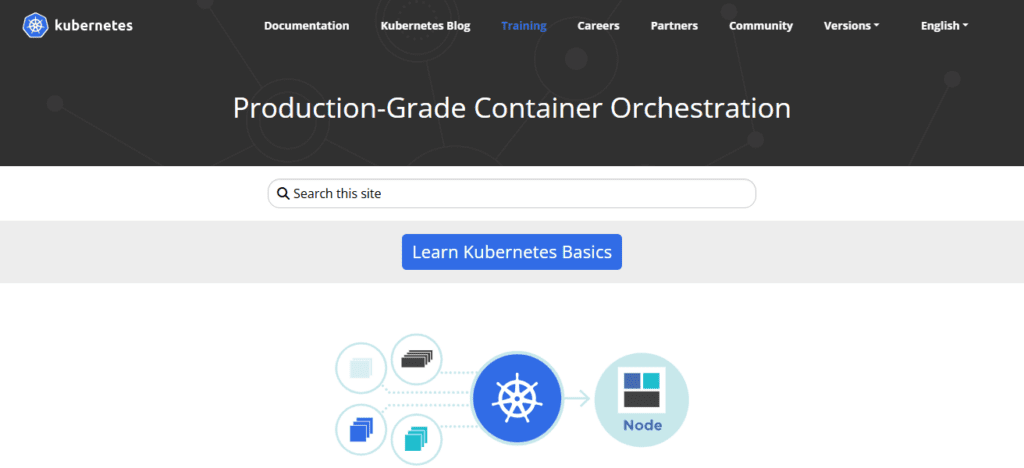
But modern setups have Kubernetes along with monitoring tools (like Prometheus) that track how the system is doing and offer ways to optimize latency for global trading environments.
| Pros | Cons |
|---|---|
| Automatic scaling of trading microservices | Complex learning curve |
| High availability and self-healing systems | Requires strong DevOps expertise |
| Efficient cloud infrastructure management | Overhead for small projects |
10. Docker
Docker is used in many prop firms to containerise their trading applications—this enables easy and reproducible deployments.
Makes sure that trading bots, APIs and risk systems run exactly the same from development to production. One practical example of this is how Docker does indeed facilitate continuous integration/continuous deployment (CI/CD) pipelines to speed up the frequent updating of trading strategies.
Docker + k8s is how prop firms scale and manage infrastructure today. In addition, it provides a safe platform for sandbox testing of novel strategies without putting live trading systems at risk.
| Pros | Cons |
|---|---|
| Consistent deployment across environments | Security risks if misconfigured |
| Easy CI/CD integration for trading systems | Limited performance isolation compared to VMs |
| Lightweight and fast containerization | Networking complexity in large setups |
Conclusion
The use of sophisticated backend technologies like Node is widespread among modern prop firms. js, python, Go, go and rust to build ultra-high-speed trading platforms & algorithmic systems.
PostgreSQL and other databases, supplemented by in-memory tools like Redis, guarantee speed and accuracy; Kafka provides real-time data streaming.
Scalable and reliable infrastructure of Kubernetes and Docker. When combined, these technologies create a multi-faceted ecosystem that enables low-latency execution, high-frequency trading, risk management and seamless global financial operations in a highly efficient and secure manner.
FAQ
Node.js powers real-time trading dashboards, APIs, and WebSocket-based market data streaming systems.
Python is used for algorithmic trading, AI models, backtesting strategies, and risk analysis automation.
Java ensures stable, secure, and high-performance order management and high-frequency trading engines.
Go is used for low-latency microservices, trade execution systems, and high-concurrency market data processing.
