

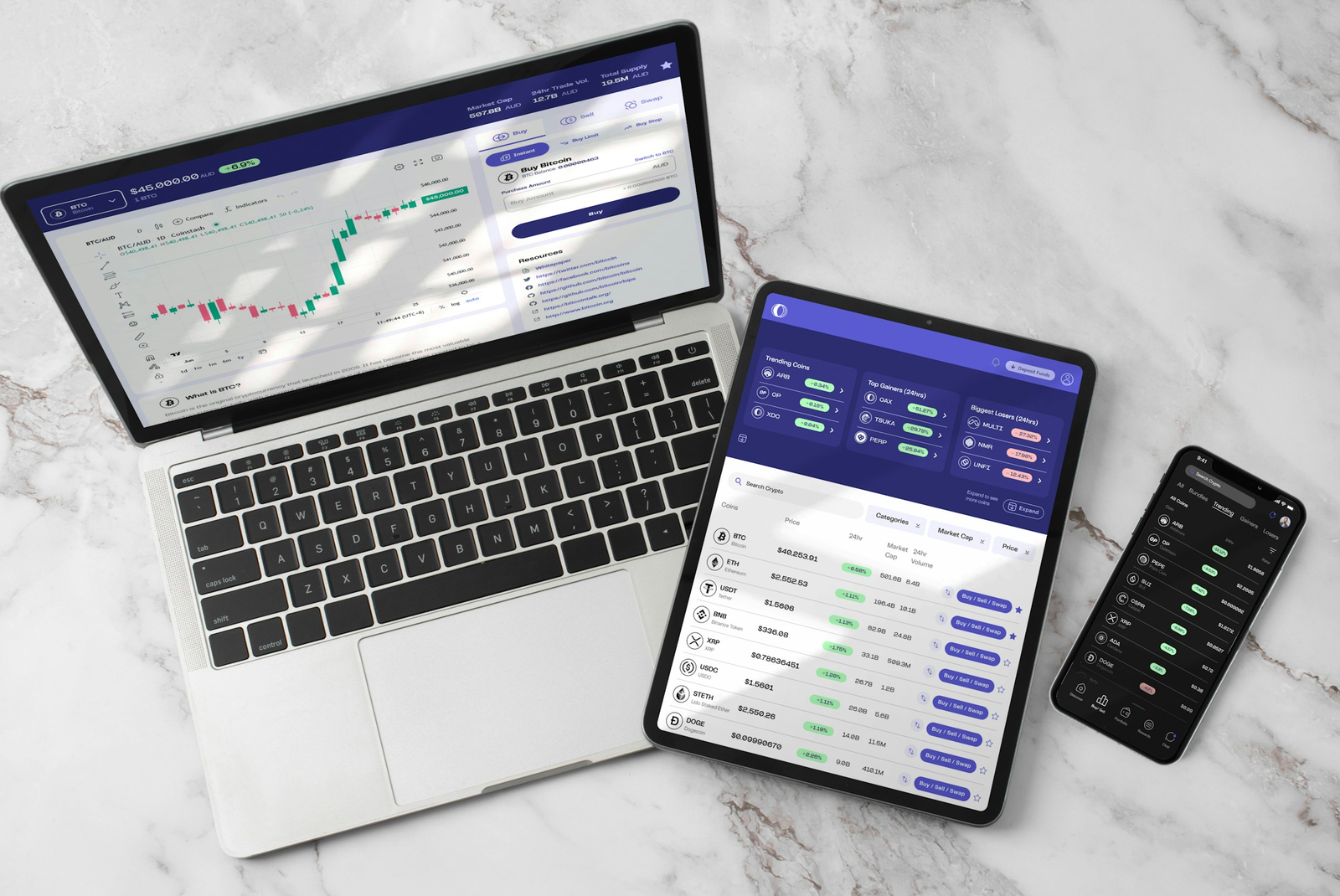
This article focuses on How to Create a Prop Firm Mobile App. This article will emphasize the development steps involved in building a secure App where traders can trade easily. This article will cover the most important steps required to design and build a safe mobile trading ecosystem in 2026. This article will include steps to include app onboarding to risk management to payouts to analytics.
What Is a Prop Firm Mobile App?
A Prop Firm Mobile App is an application developed by a proprietary trading firm for direct account and trader management on the firm’s mobile device. This application gives traders the ability to access live markets, performance, and manage trading risks in real time.
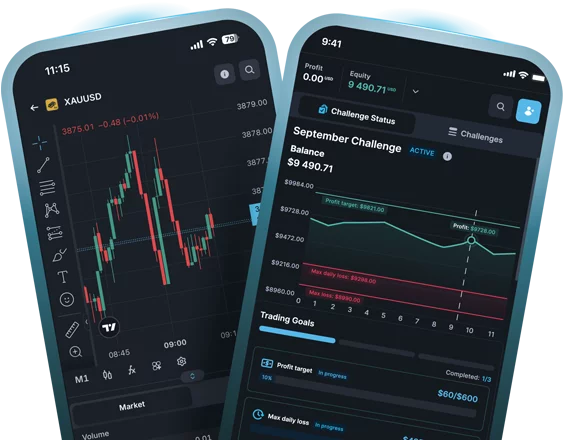
These applications incorporate features such as account dashboards, trading analytics, fund progress, and compliance in order to increase app transparency. It simplifies the onboarding and evaluation processes all while managing the communication with traders.
For users, they are able to receive important updates for the application in real time, integrated trading platforms and easy accessibility. A Prop Firm Mobile App connects the firm’s business processes and the trader’s convenience and ease in the way that trading has always desired, efficient and mobile.
How to Create a Prop Firm Mobile App
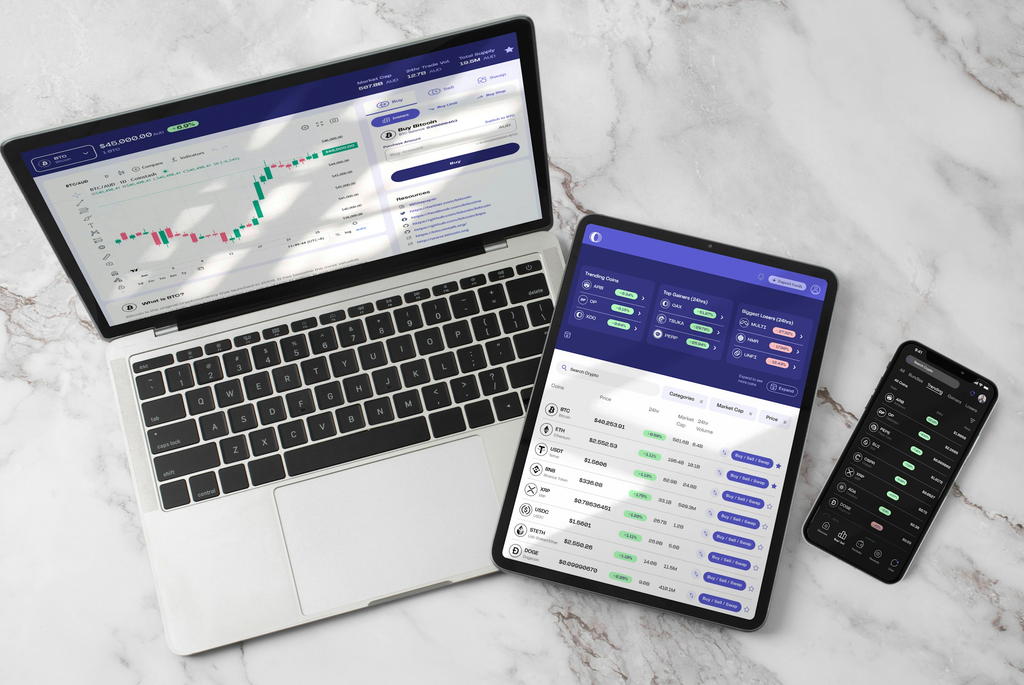
Example: Assume a prop firm builds a mobile app for the traders to register, complete KYC, purchase trading challenges, manage their accounts, receive risk alerts, and request payouts.
Step 1: Finalize the Prop Firm Business Model
First, describe how the prop firm will function. Describe challenge types, account sizes, pricing, target profits, maximum loss, daily loss limit, payout policies, and challenge eligibility.
Example: The firm can offer $10,000, $50,000, and $100,000 practice accounts with different challenge fees and risk rules.
Step 2: Formulate the Core Features of the App
Create a feature list based on what traders will value the most. Start with core functions and leave the rest for later.
Key features include:
- Registration and login of traders
- KYC verification
- Selection of challenges and payment
- Trading account dashboard
- Real-time tracking of P&L and account performance
- Tracking of drawdown
- Risk alert notifications
- Request for payout
- History of trade
- Provide support
- Notification system
Step 3: Create the User Interface
Develop mobile application screens for registration, dashboard, challenges, account performance, payouts, and support.
The dashboard should allow traders to view balance, equity, profit/loss, drawdown, and account status without navigating away from the dashboard.
Step 4: Choose the Technical Stack
Choose the mobile application technology, backend, database, API, cloud, authentication, and notification services.
One possible stack would be to use either Flutter or React Native for cross platform development, Node.js or Python for backend services, and PostgreSQL for application data.
Step 5: Integrate Trading Platforms
Connect the application to the trading infrastructure of the prop firm. This may include trade platform integrations such as MetaTrader 5, cTrader, DXtrade or TradeLocker.
The integration should be provisioned to retrieve the data needed such as:
- Account balance
- Equity
- Open positions
- Trading history
- Profit/loss
- Drawdown
- Margin
Step 6: Build the Risk Management Engine
This is arguably the most important element of the application and should evaluate trader activity against the firm’s rules in real time.
An example would be to build in an in-app warning for a trader approaching their daily loss limit, accompanied by a push notification. It may be required to record the event and update the account status based on the firm’s rules.
Step 7: Add Payments and Payouts
Set up an integrated payment solution for challenge purchases and build a payout solution for qualified traders.
The app displays the following information:
- The status of a challenge payment.
- Whether you are challenge payment eligible.
- The amount you have challenged.
- The status of a challenge payment.
- Previous challenge payment payouts.
Step 8: Implement Security and KYC
Use a combination of measures such as multi-factor authentication, encryption, secure API authentication, controls on devices/access sessions, and appropriate identity verification processes.
KYC should be aligned to the jurisdictions in which the firm operates.
Step 9: Build an Admin Dashboard
The mobile app should connect to an administrative panel where the prop firm will manage traders and operations.
The admin dashboard should have:
- Trader accounts
- Challenge sales
- KYC
- Risk Management
- Trading Activity
- Compliance
- Payout requests
- Support Requests
- Reporting
Step 10: Test the Entire System
Before launch, test the mobile app and the backend infrastructure.
Key tests should include:
- Login and authentication
- Payment processing
- Data synchronization
- Notifications
- Risk assessment
- Performance validation
- KYC
- Payout automation
Why Should Prop Firms Build a Mobile App in 2026?
Mobile trading as primary tool
TradeLocker is an example of a proprietary trading platform that offers active traders chart tools, one-click trading and real-time drawdown meters. Evidently, mobile trading is a viable option as a primary tool for trading.
Better mobile MT5
MT5 added real-time chart rendering, more order types, and improved multi-account-trading to the application, making the application more flexible and suitable for prop trading.
On-the-go risk management
Mobile trading applications allow traders to manage their exposure and risk by moving stops and closing trades (should the need arise).
Proprietary trading apps
Proprietary trading applications allow firms to differentiate their services and improve their offering to attract traders.
Mobile App Trading Market Trends
The mobile trading application market is anticipated to grow from its 2022 estimated value of $24.1B to $126B by 2032, which indicates a major focus on mobile trading interfaces.
Competitive edge
Firms that provide a proprietary trading application gain market share over firms that do not. This is accomplished by the firm’s ability to attract traders and provide a seamless onboarding and payout process.
How Does a Prop Firm Mobile App Work?
Trader onboarding
Traders create profile. They verify identity and complete secure account linking.
Evaluation process
The app notes challenges, targets, goal profits, and drawdowns goals.
Account dashboard
Current position balance and performance metrics are available to the trader.
Risk management
Trader receives notification when risk limit is approached.
Trade integration
App bridges the mobile app with trading platforms to allow trade execution.
Analytics and reporting
Traders receive performance reports, ratios of wins/losses, and consistency reports.
Funding and payouts
Traders receive funding upon the completion of evaluations.
Notifications and support
Push notifications alert traders to rule breach, and notifications to the trader regarding payouts and new assessment challenges. Support is available via chat in the app.
Essential Features of a Prop Firm Mobile App
| Feature | Description |
|---|---|
| Trader Onboarding | Secure sign‑up, KYC verification, and account creation for new traders. |
| Evaluation Tracking | Monitors profit targets, drawdown limits, and challenge progress in real time. |
| Account Dashboard | Displays balance, equity, open trades, and performance metrics clearly. |
| Risk Management Tools | Automated alerts for breaches of firm rules like max loss or daily limits. |
| Trading Integration | Connects with MT5, cTrader, or custom platforms for direct mobile trading. |
| Analytics & Reports | Provides win/loss ratios, consistency tracking, and performance insights. |
| Funding & Payouts | Manages funded accounts, payout requests, and secure transactions. |
| Notifications & Alerts | Push notifications for rule breaches, payouts, or new challenges. |
| Support & Chat | In‑app customer support, FAQs, and live chat for trader assistance. |
| Security Features | Multi‑factor authentication, encryption, and fraud prevention tools. |
Prop Firm Mobile App Architecture

Trader Interface:
- The mobile app includes features for user registration, identity verification, account overview, real-time performance tracking and account activity tracking using dashboards and notifications.
- Features that include real-time charts, progress tracking, and objectives are also included.
Trading & Market Data:
- Connectivity to trading platforms like MT5, cTrader and TradeLocker.
- Licensed market data feeds and order matching engines.
Risk Management:
- Continuous tracking of profit targets and rules.
- Automated breach detection ensures compliance to trading rules.
CRM & Identity:
- Records of the traders and agreements. KYC/AML obligations are satisfied.
- Accounts are linked to individuals.
Payment & Payout Layer:
- Processing of all payments, refunds and payouts via card, bank or crypto.
- Framework for compliance and security of transactions.
Support & Observability:
- Includes support & chat and FAQs.
- Resolution of trading disputes is enabled by observability tools.
Security Infrastructure:
- Funds of the firm and of the traders are protected.
- Includes multi-factor authentication, encryption and fraud detection.
Suggested Technology Stack
| Layer | Technology | Purpose |
|---|---|---|
| Frontend | React Native / Flutter | Cross‑platform mobile app development (iOS & Android). |
| Backend | Node.js / Django / .NET Core | Handles business logic, APIs, and firm rules. |
| Database | PostgreSQL / MongoDB | Stores trader data, evaluations, and account records. |
| Trading Integration | MetaTrader 5 API / cTrader Open API / TradeLocker SDK | Connects app with trading platforms for execution. |
| Risk Engine | Custom microservices with Redis | Real‑time monitoring of drawdown, profit targets, and rule breaches. |
| Authentication | OAuth 2.0 / Firebase Auth | Secure login, identity verification, and multi‑factor authentication. |
| Payments | Stripe / PayPal / Crypto gateways | Manages deposits, refunds, and payouts securely. |
| Cloud Hosting | AWS / Azure / Google Cloud | Scalable infrastructure, load balancing, and monitoring. |
| Notifications | Firebase Cloud Messaging / OneSignal | Push alerts for rule breaches, payouts, and updates. |
| Analytics | Google Analytics / Mixpanel | Tracks trader performance, app usage, and engagement. |
| Security | SSL/TLS, End‑to‑End Encryption | Protects data, transactions, and trader accounts. |
Trading Platform Integration
| Platform | Integration Method | Purpose |
|---|---|---|
| MetaTrader 5 | MT5 Manager & API | Enables trade execution, account monitoring, and rule enforcement. |
| cTrader | cTrader Open API | Provides advanced charting, order management, and mobile trading support. |
| TradeLocker | SDK & REST APIs | Offers modern UI, one‑click trading, and real‑time drawdown meters. |
| Custom Engine | Proprietary APIs | Tailored execution logic, risk monitoring, and firm‑specific rules. |
| Market Data Feeds | FIX Protocol / WebSocket | Provides live price feeds, tick data, and liquidity access. |
| Risk Management Module | Microservices + Redis | Tracks drawdown, profit targets, and compliance in real time. |
| Payment Gateways | Stripe / Crypto APIs | Handles deposits, refunds, and payouts securely. |
Prop Firm Mobile App Admin Dashboard
A Prop Firm Mobile App Admin Dashboard is the control center where firm managers can track, manage, and configure operations in regards to trader activity. Managers can utilize the secure interface to employ tools used to track, manage, and evaluate systems, as well as to assess risk, and approve payouts. Managers can use the dashboard to evaluate traders’ progress toward goals, spot violations of drawdown limits, and quickly stop or modify trader accounts.
The dashboard has the ability to integrate CRM systems in compliance and trader communication management in addition to KYC/AML onboarding for firms. The dashboard also includes analytics systems to help evaluate performance and assess the risk of fraud and payouts. In short, the admin dashboard offers systems for management and visibility of traders, compliance, and firm operations.
Security & Compliance Considerations
Data Encryption: Use SSL/TLS and end-to-end encryption to ensure the safety of trader data and the protection of transactions.
Multi-Factor Authentication: Introduce MFA and prevent access to accounts by unauthorized persons.
KYC/AML Compliance: Verify the identity of traders and monitor cases of suspicious activity in order to comply with the regulations.
Risk Monitoring: Establish automated systems which enforce the trading rules and limits to minimize drawdowns.
Secure Payments: Establish a connection to payment gateways which are PCI-DSS compliant for deposits, refunds, and withdrawals.
Fraud Detection: Implement AI to monitor the market for the detection of duplicate accounts and suspicious trades.
Audit Trails: Maintain logs for the actions of traders and the interventions of the admin for the purpose of Verisimilitude.
Regulatory Updates: Be flexible in order to incorporate changes to regulations pertaining to financial activities and services.
Data Privacy: Use data protection systems locally, and comply with CCPA and GDPR to maintain the rights of the trader.
How Much Does It Cost to Build a Prop Firm Mobile App in 2026?
| App Type | Typical Cost (USD) | Timeline | Scope |
|---|---|---|---|
| Simple MVP | $20,000 – $60,000 | 2–4 months | Basic UI, login, evaluation tracking, limited backend. |
| Mid‑Complexity | $60,000 – $150,000 | 4–8 months | Accounts, payments, notifications, admin dashboard, API integrations. |
| Complex Build | $150,000 – $400,000 | 9–15 months | Real‑time risk engine, multiple trading integrations, advanced analytics. |
| Enterprise App | $400,000+ | 12–18+ months | Compliance modules, legacy integration, multi‑role systems, global scalability. |
Common Mistakes to Avoid

Risk Controls: Automated drawdowns and loss limits must be imposed to avoid a breach of the terms given to clients.
Weak Security: Traders’ accounts become vulnerable to fraud if multi-factor authentication and/or data encryption is not implemented.
Poor Trading Integrations: Empty or unstable APIs within MT5/cTrader result in delays in order executions and frustrations among traders.
Overcomplicated UI: Traders avoid dashboards that aren’t designed in a user-centric manner. Simple designs are preferred.
Failure to be Compliant: Breaches of KYC/AML and GDPR standards result in costly lawsuits and reputational damage.
Late Notifications: Evidence shows that late notifications concerning breaches or payouts negatively impacts customer satisfaction and trust.
Neglecting Admin Tools: Without a robust admin dashboard, firms are unable to control their accounts and implement their rules.
No Scalability Planning: Apps designed without cloud scalability solutions result in crashing applications for users.
Neglecting Analytics: Without implementation of analytics, firms can’t improve how they attract new potential clients.
Underestimating Maintenance: If maintenance is neglected, then outdated and vulnerable applications are the new normal.
MVP vs Advanced Prop Firm App
| Aspect | MVP App | Advanced App |
|---|---|---|
| Development Cost | $20k – $60k | $150k – $400k+ |
| Timeline | 2–4 months | 9–15+ months |
| Core Features | Login, onboarding, evaluation tracking, basic dashboard | Full dashboards, multi‑account support, payouts, analytics |
| Trading Integration | Single platform (e.g., MT5 API) | Multiple platforms (MT5, cTrader, TradeLocker) |
| Risk Management | Basic drawdown alerts | Real‑time risk engine with automated enforcement |
| Payments | Simple Stripe/PayPal integration | Multi‑currency, crypto gateways, PCI‑DSS compliance |
| Notifications | Basic push alerts | Advanced alerts with customization & real‑time updates |
| Analytics | Limited performance stats | Deep analytics, win/loss ratios, consistency tracking |
| Admin Dashboard | Minimal account monitoring | Full CRM, fraud detection, payout approvals |
| Security | MFA + SSL | End‑to‑end encryption, fraud AI, compliance modules |
| Scalability | Limited to small user base | Cloud‑native, scalable to thousands of traders |
Future Trends in Prop Firm Mobile Apps
Looking ahead, Prop Firm Mobile Apps will incorporate more automation and customization. By 2026, trade evaluation apps will be trading ecosystems. Soon firms will invest in AI to assess trader performance. Automated systems will create an ecosystem of rules that will manage risk. Integration with MT5, cTrader, and even early stage decentralized exchanges will happen across multiple devices.
App developers want to increase user interaction. A new system of trader evaluations will gamify trading competitions. Payments to traders will be made using blockchain and smart contracts.
These payments, and all the trades, will create a more compliant and transparent system. Finally, AI will build individual trading dashboards with tools for the trader that will offer personalized insights and suggest key data that may provide trading opportunities.
Conclusion
In 2026, mobile app integration for Prop Firms will no longer be a bonus, it will be a necessity. With convenience and mobility, firms are able to manage complexity with real time evaluation, automated onboarding, and flexible control over risk management as well as secure and efficient payouts. All of these key functions can be unified with the right system and the admin dashboard.
Analytics powered by AI will be the next phase of mobile app innovation for Prop Firms, driven by feature automation like instant payments powered by blockchain and gamification.proprietary trading firms are desirable to top level traders, and any increase in efficiency from the firms will be attractive to traders.
FAQs
It’s a mobile platform that allows traders to join proprietary trading firms, complete evaluations, monitor accounts, and request payouts—all from their smartphone.
Traders must meet profit targets and follow risk rules (like max drawdown limits). The app tracks progress in real time and alerts traders of breaches.
Yes, most apps integrate with platforms like MT5, cTrader, or TradeLocker, enabling direct trade execution.
Apps use encryption, multi‑factor authentication, and fraud detection to protect trader accounts and transactions.
Once traders pass evaluations, they can request payouts via bank transfer, card, or crypto gateways, processed securely within the app.